
Geschiedenis van Lot
Medium
engraving
Dimensions
81; 115
Rights
Public Domain
About this artwork
plaatrand: hoogte 115 mm x breedte 81 mm
Art Historical Context
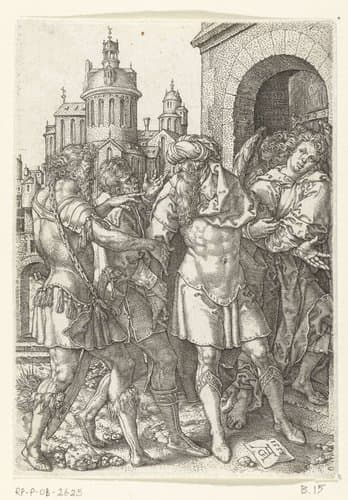
**Geschiedenis van Lot** (History of Lot), a delicate engraving by Heinrich Aldegrever 1555, captures pivotal biblical narrative from the Book of Genesis. Aldegrever, a German printmaker and goldsmith active in the Northern Renaissance, depicts the dramatic story of Lot—Abraham's nephew—fleeing the doomed cities of Sodom and Gomorrah with his family, marked by divine destruction and the tragic pillar of salt. Measuring just 115 mm high by 81 mm wide, this intimate plate invites close inspection, revealing the artist's skill in condensing epic moral tales into a pocket-sized format. As one of the "Little Masters," Aldegrever excelled in small-scale engravings, using a burin to incise fine lines into a copper plate, which were then inked and printed. This technique allowed for exceptional detail—think intricate textures of flames, figures in motion, and expressive faces—making high art accessible beyond elite patrons. In the 16th century, such prints revolutionized visual storytelling, bridging religious devotion and emerging print culture. Created amid the Protestant Reformation, this work reflects the era's fervor for biblical imagery as moral instruction. Aldegrever's precise, narrative-driven style underscores themes of faith, judgment, and human frailty, offering visitors a window into Renaissance devotion and the power of the printed image to inspire reflection.
About the Artist
Heinrich Aldegrever · 1502–1561
Heinrich Aldegrever, born in 1502 in Paderborn, Westphalia, to parents Herman and Katherine Trippenmeker—a family of clog-makers known by the dialect name Trippenmecker—emerged as a multifaceted artist in the German Renaissance. His early training remains undocumented, though he likely apprenticed in a Soest goldsmith's workshop after relocating there around 1525, where he joined the painters' gui...