
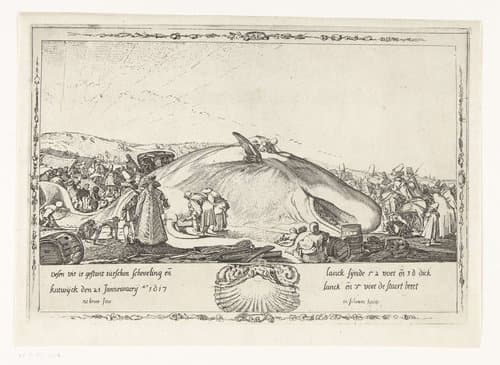
Gestrande potvis op het strand tussen Scheveningen en Katwijk op 21 januari 1617
Medium
etching
Dimensions
328; 224
Rights
Public Domain
About this artwork
verzamelaarsmerk, verso midden onder, gestempeld: Lugt 2228a
Art Historical Context
In the crisp lines of this 1617 etching, artist Willem Pietersz Buywech captures a rare spectacle: a massive sperm whale (vis) stranded on the between Scheveningen andwijk on January 21. Measuring 224 × 328 mm, the print buzzes with activity—crowds of onlookers, boats, and horse-drawn carts swarm the scene, turning a natural marvel into a communal event. Buytewech, a figure in the Dutch Golden Age known for his lively genre scenes and innovative etchings, masterfully blends topography with human drama, making this one of the earliest visual records of such a phenomenon. Whale strandings were sensational news in the early 17th century, especially along Holland's bustling North Sea coast, where they drew scientists, artists, and the curious public alike. This particular event fueled widespread fascination, inspiring poems, pamphlets, and dissections that advanced early marine biology. Buytewech's etching technique—using acid to bite intricate lines into a copper plate—allowed for detailed reproduction, disseminating the wonder far beyond eyewitnesses and reflecting the era's growing interest in empirical observation. Verso bears the collector's mark Lugt 2228a, a testament to its enduring appeal among connoisseurs. For visitors, this work evokes the thrill of discovery, bridging art, science, and spectacle in the Golden Age.