
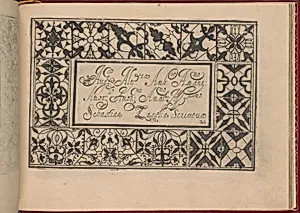
Ghirlanda: Di sei vaghi fiori scielti da piu famosi Giardini d'Italia, page 33 (recto)
October 1, 1604
Medium
Etching and drawing
Dimensions
Overall: 5 7/8 x 7 7/8 in. (15 x 20 cm)
Classification
Books|Prints|Ornament & Architecture
Department
Drawings and Prints
Museum
Metropolitan Museum of Art, New York, NY
Credit
Rogers Fund, 1922
Accession Number
22.66.5(40)
Rights
Public Domain
Tags
Art Historical Context
Step into the ornate world of early 17th-century Italian with *Ghirlanda: Di seihi fiori scielti piu famosi Giardini'Italia*, page 33recto), created by Paulo Tozzi and published by Libraria del Giesu on October 1, 1604. This delicate etching combined with drawing captures a "garland of six pretty flowers" sourced from Italy's most renowned gardens,ifying the era's fascination with botanical ornamentation. Measuring just 5 7/8 x 7 7/8 inches, this page from a pattern book served as inspiration for artists, architects, and craftsmen. Etching, a innovative printmaking technique popular in the Renaissance-to-Baroque transition, allowed Tozzi to render intricate floral motifs with precise, fluid lines, while added drawing brought a handcrafted touch. Produced in Rome—near the influential Church of the Gesù—these prints reflect the Counter-Reformation's embrace of lavish decoration to inspire awe and devotion. Housed in the Metropolitan Museum of Art's Drawings and Prints department (Rogers Fund, 1922), this work highlights the cultural role of ornament books in disseminating elegant designs across Europe. They bridged art and applied crafts, influencing everything from frescoes to textiles, and celebrate Italy's lush gardens as symbols of natural beauty and ingenuity. A charming glimpse into a blooming artistic heritage!
About the Artist
Pietro Paulo Tozzi|Libraria del Giesu (Italian|Italian) · 1555 |1593 –1622 |1628
Italian, Perugia ca. 1555–probably 1622 Rome|Italian, active 1593–1628