
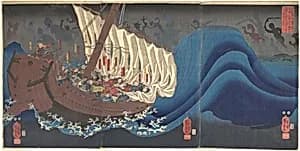
歌川国芳画 「大物の浦平家の亡霊」|Ghosts of the Taira at Daimotsu Bay
1843–47
Medium
Triptych of woodblock-printed books (nishiki-e); ink and color on paper
Dimensions
Oban triptych: Each H. 14 3/4 in. (37.5 cm); W. 9 7/8 in. (25.1 cm)
Classification
Prints
Culture & Period
Japan · Edo period (1615–1868)
Department
Asian Art
Museum
Metropolitan Museum of Art, New York, NY
Credit
Fletcher Fund, 1929
Accession Number
JP1565
Rights
Public Domain
Tags
Art Historical Context
In the turbulent waves of Daimotsu Bay, Utagawa Kuniyoshi conjures a haunting spectacle in his triptych *Ghosts of the Taira at Daimotsu Bay (1843–47). This Edo-period masterpiece from Japan's ukiyo-e tradition—literally "pictures of the floating world"—captures the vengeful spirits of the Taira clan (Heike), rising from the sea to thwart their Minamoto rivals (Genji). Kuniyoshi, a virtuoso of warrior prints and supernatural scenes, draws from the epic *Tale of the Heike*, blending history with folklore in a dramatic narrative that gripped 19th-century audiences. Printed as a nishiki-e ("brocade picture") triptych—three oban sheets (each about 14¾ x 9⅞ inches) in vibrant ink and color on paper—this work showcases the pinnacle of woodblock techniques. Artisans layered dozens of color blocks for lush blues, fiery reds, and ghostly whites, evoking churning waves, fragile boats, and spectral warriors. Kuniyoshi's dynamic composition, with figures twisting amid foam, heightens the supernatural terror, making viewers feel the chill of the afterlife. Housed in the Metropolitan Museum of Art's Asian Art collection (Fletcher Fund, 1929), this print reflects Edo Japan's fascination with yūrei (ghosts) and naval strife, offering a window into a culture where art bridged myth and memory. A thrilling reminder of how woodblocks could summon the past's unrest!
About the Artist
Utagawa Kuniyoshi · 1797–1861
Utagawa Kuniyoshi (1797–1861) was born in Edo to the silk-dyer Yanagiya Kichiyemon, originally bearing the childhood name Yoshisaburō. From a young age, he assisted in his family's pattern design work, which sharpened his innate mastery of color and textile motifs that would permeate his later prints. At around twelve years old, his prodigious drawing skills drew the attention of the renowned Utag...