
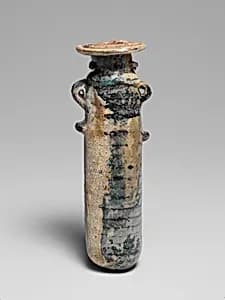
Glass alabastron (perfume bottle)
Unknown Artist
5th century BCE
Medium
Glass
Dimensions
H.: 3 13/16 in. (9.7 cm)
Classification
Glass
Culture & Period
Greek, Eastern Mediterranean · Classical
Department
Greek and Roman Art
Museum
Metropolitan Museum of Art, New York, NY
Credit
Theodore M. Davis Collection, Bequest of Theodore M. Davis, 1915
Accession Number
30.115.35
Rights
Public Domain
Art Historical Context
This elegant glass alabastron, slender perfume bottle from the 5th century BCE,ails from the Eastern Mediterranean during Greece's Classical period. Standing at 3 13/16 inches (9.7 cm) tall, it reflects the era's sophisticated trade networks, where glass vessels were prized luxury items imported or crafted for elite use. Produced in the Greek cultural sphere, such bottles were essential for storing aromatic oils, perfumes, and cosmetics—staples of ancient hygiene, beauty rituals, and even funerary offerings. Crafted from delicate glass, the alabastron's form is iconic: a bulbous body tapering to a narrow neck and flared mouth, designed for precise dispensing without spilling. Early glassmaking techniques, likely core-forming, involved wrapping molten glass threads around a removable core, creating vibrant, translucent effects that showcased artisans' skill amid the fragility of the medium. Though the artist remains unknown, this piece embodies the Classical emphasis on harmony and functionality. Now part of the Metropolitan Museum of Art's Greek and Roman Art Department, thanks to the Theodore M. Davis Collection (bequeathed in 1915), it offers a tangible link to daily life in antiquity, evoking the scents and senses of a world 2,500 years past. A true gem for admirers of ancient ingenuity!