
Glass Fragment
Unknown Artist
12th–14th century
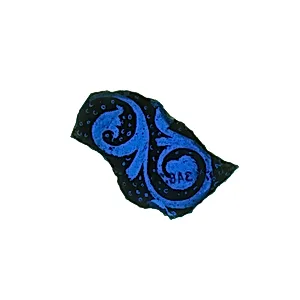
Medium
Pot-metal glass, vitreous paint
Dimensions
Overall: 3/4 x 1 inch (1.9 x 2.5 cm)
Classification
Glass-Stained
Culture
French
Department
Medieval Art
Museum
Metropolitan Museum of Art, New York, NY
Credit
Gift of Ella Brummer, in memory of her husband, Ernest Brummer, 1977
Accession Number
1977.346.26
Rights
Public Domain
Art Historical Context
This delicate glass fragment, hailing from 12th–14th France, offers a tantalizing glimpse into the luminous world of medieval stained glass. Likely salvaged from a grand Gothic cathedral window—think soaring structures like Chartres or Sainte-Chapelle—this tiny piece (just 3/4 x 1 inch) captures the era's devotion to storytelling through light. During the High Middle Ages, French artisans crafted such windows to bathe sacred spaces in jewel-toned glows, illuminating biblical narratives for worshippers who couldn't read. Crafted from pot-metal glass—colored throughout by metallic oxides melted into the batch for enduring vibrancy—the fragment was enhanced with vitreous paint, a glassy enamel fired onto the surface for intricate details like facial features or folds of cloth. This technique allowed for bold, translucent hues that danced with sunlight, symbolizing divine radiance. Though its exact scene is lost, it exemplifies the technical mastery of French glaziers, whose innovations peaked in the Gothic period. Today, gifted to the Metropolitan Museum of Art in 1977 by Ella Brummer in memory of her husband, Ernest, this fragment reminds us of art's fragility and resilience. Preserved amid centuries of decay, it whispers of a time when glass was both craft and prayer.