
Glass Fragment
Unknown Artist
12th–14th century
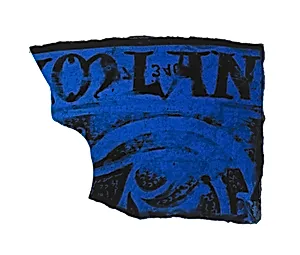
Medium
Pot-metal glass, vitreous paint
Dimensions
Overall: 1 7/8 x 2 1/2 inch (4.8 x 6.4 cm)
Classification
Glass-Stained
Culture
French
Department
Medieval Art
Museum
Metropolitan Museum of Art, New York, NY
Credit
Gift of Ella Brummer, in memory of her husband, Ernest Brummer, 1977
Accession Number
1977.346.27
Rights
Public Domain
Art Historical Context
This delicate glass fragment, dating to France's 12th–14th centuries, offers a glimpse into the luminous world of medieval stained glass. a remnant from a grand church window, it exemplifies the era's masterful use of light as a spiritual tool, transforming cathedrals into glowing narratives of faith. Though the full scene is lost, its small scale—barely two inches wide—highlights the precision required for such intricate designs, common in Gothic and late Romanesque architecture. Crafted from pot-metal glass, where metallic oxides were fused into the molten glass for vibrant, translucent colors that endure centuries, the fragment was enhanced with vitreous paint. This glassy enamel, fired onto the surface, allowed artists to add fine details like facial features, folds of drapery, or architectural elements without compromising the jewel-like glow. These techniques, perfected in French workshops, made stained glass a pinnacle of medieval innovation, rivaling illuminated manuscripts in storytelling power. Preserved through the generous gift of Ella Brummer in memory of her husband Ernest, this piece at the Metropolitan Museum of Art invites us to ponder the anonymous artisans whose fleeting light still captivates. It reminds visitors of stained glass's role in medieval devotion—windows to heaven for worshippers below.