
Glass Fragment
Unknown Artist
12th–14th century
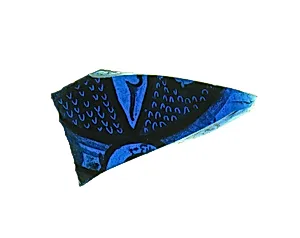
Medium
Pot-metal glass, vitreous paint
Dimensions
Overall: 1 1/4 x 5/8 in. (3.2 x 1.6 cm)
Classification
Glass-Stained
Culture
French
Department
Medieval Art
Museum
Metropolitan Museum of Art, New York, NY
Credit
Gift of Ella Brummer, in memory of her husband, Ernest Brummer, 1977
Accession Number
1977.346.37
Rights
Public Domain
Art Historical Context
This delicate glass fragment, hailing from medieval France between the 12th and 14th centuries, offers a glimpse into the luminous world of Gothic stained-glass windows. Though tiny—measuring just 1¼ x ⅝ inches (3.2 x 1.6 cm)—it once formed part of a larger ecclesiastical panel, likely adorning a cathedral or abbey. During this era, stained glass transformed sacred spaces, filtering sunlight into jewel-toned narratives that educated the faithful in biblical stories and saints' lives. Crafted from pot-metal glass—where metallic oxides were fused into the molten glass for vibrant, translucent colors—and detailed with vitreous paint fired onto the surface, the fragment showcases sophisticated medieval techniques. Pot-metal allowed for rich, stable hues like ruby red or sapphire blue without fading, while the paint added fine lines, shading, and facial features, mimicking silver stain for golden effects. These methods peaked in French Gothic workshops, revolutionizing architecture by turning stone walls into glowing tapestries of light. Preserved through the generous gift of Ella Brummer in memory of her husband, Ernest Brummer, in 1977, this artifact at The Metropolitan Museum of Art reminds us of the fragility and enduring beauty of medieval artistry. Even in its broken state, it evokes the awe-inspiring glow of cathedrals like Chartres, bridging us to a time when glass was both art and divine illumination.