
Glass Fragment
Unknown Artist
13th–14th century (?)
Medium
Pot metal glass
Dimensions
1/2" to 7/8" high x 1/2" to 1 1/16" wide
Classification
Glass-Stained
Culture
European
Department
Medieval Art
Museum
Metropolitan Museum of Art, New York, NY
Credit
Gift of George D. Pratt, 1930
Accession Number
30.73.22a-j
Rights
Public Domain
Art Historical Context
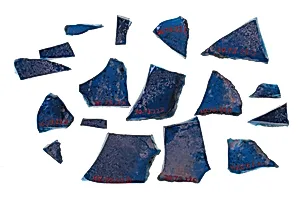
This delicate glass fragment, dating to the 13th–14th century, offers a glimpse into the luminous world of medieval European stained glass. Crafted in the Medieval Art tradition, it exemplifies pot metal glass—a technique where metal oxides like copper, iron, or cobalt were mixed into molten glass before firing, creating vibrant, translucent colors that endure without fading. Unlike later methods relying on painted details, pot metal glass achieved its hues intrinsically, allowing light to transform spaces into ethereal narratives. Though tiny—measuring just 1/2 to 7/8 inches high and 1/2 to 1 1/16 inches wide—this shard likely originated from a grand Gothic cathedral window, where such panels depicted biblical scenes, saints, or heraldry to educate the faithful. Its survival highlights the fragility of these artworks, often shattered by time, war, or iconoclasm, yet preserved as treasures of cultural heritage. A generous gift from George D. Pratt in 1930 to the Metropolitan Museum of Art, this fragment invites us to imagine the divine glow it once cast across stone arches, bridging the medieval past with our modern gaze.