
Glass Fragments
Unknown Artist
4th century
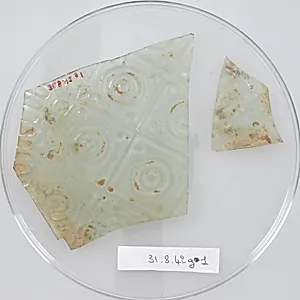
Medium
Glass
Dimensions
Storage (petri dish diam.): 5 13/16 in. (14.7 cm)
Classification
Glass-Vessels
Culture
Coptic
Department
Medieval Art
Museum
Metropolitan Museum of Art, New York, NY
Credit
Rogers Fund, 1931
Accession Number
31.8.42.62
Rights
Public Domain
Art Historical Context
These delicate *Glass Fragments* hail from 4th-century Coptic Egypt, a vibrant era when early Christianity flourished amid ancient Egyptian traditions and Greco-Roman influences. Classified as remnants of a glass vessel, these shards—now preserved in a petri dish measuring 5 13/16 inches (14.7 cm) in diameter—offer a into the daily life and craftsmanship of Coptic artisans. Acquired through the Rogers Fund in 1931, they reside in the Metropolitan Museum of Art's Medieval Art Department, underscoring the museum's commitment to preserving fragments that tell big stories. Coptic glassmaking built on Egypt's millennia-old expertise, employing techniques like free-blowing and molding to create functional vessels for holding oils, perfumes, or even in funerary rites. Though the artist remains unknown, these pieces highlight the culture's fusion of utility and subtle artistry—often featuring iridescent weathering from centuries underground, which adds a poetic shimmer today. In a time of religious transformation, such objects bridged pagan pasts and Christian futures, serving both households and sacred spaces. For visitors, these fragments evoke the fragility of history itself: tiny survivors from a world of bustling Nile Valley workshops, inviting us to ponder the hands that shaped them and the lives they touched.