
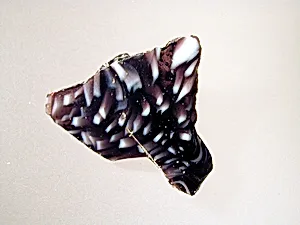
Glass mosaic ribbed bowl fragment
Unknown Artist
late 1st century BCE–early 1st century CE
Medium
Glass
Dimensions
Other: 1 5/16 x 1 1/8 in. (3.3 x 2.8 cm)
Classification
Glass
Culture & Period
Roman · Early Imperial
Department
Greek and Roman Art
Museum
Metropolitan Museum of Art, New York, NY
Credit
Edward C. Moore Collection, Bequest of Edward C. Moore, 1891
Accession Number
91.1.2039
Rights
Public Domain
Art Historical Context
This delicate fragment from a glass mosaic ribbed bowl a glimpse into the sophisticated craftsmanship of Early Imperial Rome, dating to the late 1st century through the early 1st CE. Measuring just 1 5/16 x 1 1/8 inches (3.3 x 2.8 cm), it once belonged to a larger vessel, likely used for dining or display among the Roman elite. Housed in the Metropolitan Museum of Art's Greek Roman Art Department, it the collection through the bequest of Edward C. in 1891. The artwork showcases the innovative mosaic glass technique, where slender canes of colored glass—often in vibrant blues, whites, and greens—were fused together, sliced, and arranged to create intricate patterns mimicking luxury stones like marble or semiprecious gems. The ribbed design, with its molded vertical ridges, added both aesthetic appeal and structural elegance, reflecting Roman glassmakers' mastery of heat and mold-forming processes. This method, perfected in Italy and the eastern Mediterranean, democratized opulence, turning everyday tableware into miniature artworks. In the bustling world of the early Roman Empire, such bowls symbolized technological prowess and cultural exchange along trade routes. Though a mere shard, it evokes the vibrancy of ancient banquets and the ingenuity that made Roman glass a coveted export, bridging art and utility in remarkable ways.