
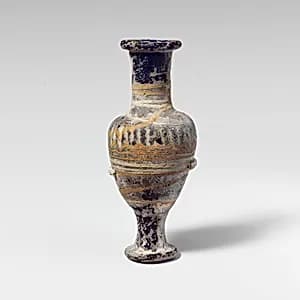
Glass unguentarium (perfume bottle)
Unknown Artist
3rd century BCE
Medium
Glass
Dimensions
Overall: 3 3/8 x 1 3/8in. (8.6 x 3.5cm)
Classification
Glass
Culture & Period
Greek, Eastern Mediterranean · Hellenistic
Department
Greek and Roman Art
Museum
Metropolitan Museum of Art, New York, NY
Credit
The Cesnola Collection, Purchased by subscription, 1874–76
Accession Number
74.51.325
Rights
Public Domain
Art Historical Context
This delicate glass unguentarium, slender perfume bottle from the rd century BCE, exemplifies refined craftsmanship of Hellenistic Greek artisans in the Eastern Mediterranean. Standing just 3 3/8 inches tall, its narrow form was perfectly suited for holding scented oils, perfumes, or cosmetics—essentials in daily grooming and beauty rituals of the ancient world. Produced during the Hellenistic period (–31 BCE), following Alexander the Great's conquest, such vessels reflect the blending of Greek, Persian, and Near Eastern influences, with glassmaking hubs like Rhodes and Syria advancing techniques such as core-forming or early blowing. Glass unguentaria like this one highlight a pivotal moment in ancient technology: while glass had been used for beads and small objects since the Bronze Age, by the Hellenistic era, it became accessible for everyday luxury items. Translucent and lightweight, this bottle would have shimmered with iridescence over time due to natural weathering, adding to its allure. Often found in tombs, they symbolized personal care even in the afterlife, underscoring the Greeks' appreciation for sensory pleasures. Part of The Cesnola Collection at The Metropolitan Museum of Art, acquired through public subscription in 1874–76, this piece offers a tangible glimpse into Hellenistic life—elegant, functional, and beautifully preserved.