
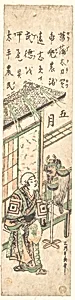
Go Gatsu|The Fifth Month
ca. 1748
Medium
Woodblock print; ink and color on paper
Dimensions
H. 12 1/4 in. (31.1 cm); W. 2 15/16 in. (7.5 cm)
Classification
Prints
Culture & Period
Japan · Edo period (1615–1868)
Department
Asian Art
Museum
Metropolitan Museum of Art, New York, NY
Credit
Gift of Estate of Samuel Isham, 1914
Accession Number
JP844
Rights
Public Domain
Tags
Art Historical Context
**Go Gatsu (The Fifth Month)**, created around 1748 by Ishikawa Toyon, is a delicate woodblock print from Japan's Edo period (16151868). Toyonobu, a prominent ukiyo-e artist under Nishimura Shigenaga captured the vibrant "floating world" of everyday life, theater, and festivals in his works. This narrow print—measuring just 12¼ × 2⅞ inches—exemplifies the intimate scale often used for series or albums, allowing affordable access to art for urban dwellers in Edo (modern Tokyo). The title refers to the fifth month of the lunar calendar, associated with Tango no Sekku, or Boys' Day, a time when families displayed samurai helmets (kabuto) as symbols of strength and protection for their sons. Tags highlighting men and helmets suggest a scene of warriors or celebrants in traditional armor, evoking martial pride amid seasonal festivities. Woodblock printing, the medium here, was revolutionary: intricate carvings on wooden blocks enabled multi-color layers, producing bold inks and hues on paper that brought dynamic energy to flat surfaces. Housed in the Metropolitan Museum of Art's Asian Art Department, this gift from the Estate of Samuel Isham in 1914 preserves Toyonobu's contribution to ukiyo-e's golden age. It invites us to glimpse Edo Japan's blend of ritual, valor, and artistry, where even a slender print could celebrate cultural heritage.
About the Artist
Ishikawa Toyonobu · 1711–1785
Japanese, 1711–1785