
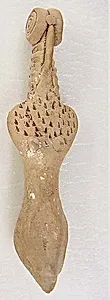
Goddess
Unknown Artist
ca. 3500–3000 BCE
Medium
Terracotta
Dimensions
H. 2 3/4 in. (7 cm); W. 3/4 in. (1.9 cm)
Classification
Sculpture
Culture
Pakistan (Quetta area)
Department
Asian Art
Museum
Metropolitan Museum of Art, New York, NY
Credit
Purchase, David E. Stutzman Gift, 2003
Accession Number
2003.571.2
Rights
Public Domain
Tags
Art Historical Context
This petite terracotta figurine, *Goddess*, hails from the Quetta area of ancient Pakistan and dates to around 3500–3000 BCE. Standing just 2¾ inches tall, it exemplifies the early craftsmanship of the Indus Valley cultural tradition—one of the world's earliest urban civilizations, flourishing along the Indus River in what is now Pakistan and northwest India. Crafted from fired clay, a durable and accessible medium, such small sculptures were likely hand-modeled, capturing simple yet evocative forms that suggest a female deity. These goddess figures hold profound cultural importance, often interpreted as symbols of fertility, motherhood, or protective spirits in prehistoric South Asian societies. Found in domestic and ritual contexts across Indus Valley sites, they hint at widespread veneration of feminine divine powers, predating later Hindu traditions. The anonymity of the artist underscores the communal nature of this art, produced by skilled artisans for everyday devotion rather than elite patronage. Today, housed in the Metropolitan Museum of Art's Asian Art Department, this delicate piece invites us to ponder the spiritual lives of people over 5,000 years ago, bridging the ancient world with our own fascination for humanity's enduring quest for the sacred.