
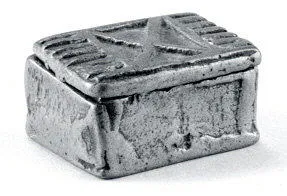
Gold Dust Box
Unknown Artist
19th century
Medium
Brass
Dimensions
H x W: 5/8 x 1 in. (1.6 x 2.5 cm)
Classification
Metal-Containers
Culture
Akan peoples, Asante
Department
Arts of Africa, Oceania, and the Americas
Museum
Metropolitan Museum of Art, New York, NY
Credit
Gift of William W. Brill, 1977
Accession Number
1977.224.6a, b
Rights
Public Domain
Tags
Art Historical Context
This exquisite **Gold Dust Box**, crafted by an unknown Asante artist in the 19th century, exemplifies masterful metalworking traditions of the Akan peoples in present-day Ghana. Measuring just 5/8 x 1 inches (1.6 x 2.5 cm), this diminutive brass container was designed to hold gold dust—a form of currency and symbol of wealth in Asante society. Its compact size belies its cultural weight, serving as both a practical vessel and a status object for elites within the powerful Asante Kingdom. The Asante were renowned across West Africa for their gold trade and artistry, with brass objects like this one often featuring intricate engravings or motifs that conveyed proverbs, social commentary, or royal symbolism. Though specific decorations on this piece are not detailed, its classification as a metal container highlights the technical precision of lost-wax casting or repoussé techniques typical of Akan goldsmiths, who repurposed imported brass into treasures rivaling gold in prestige. Today, housed in the Metropolitan Museum of Art's Department of Arts of Africa, Oceania, and the Americas (gift of William W. Brill, 1977), this box offers a window into the Asante's sophisticated economy and aesthetic worldview, reminding us how everyday objects could embody profound cultural narratives.