
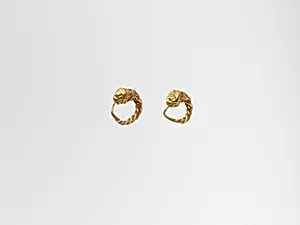
Gold earring with head of a lion
Unknown Artist
4th‒3rd century BCE
Medium
Gold
Dimensions
Diam.: 1/2 in. (1.3 cm)
Classification
Gold and Silver
Culture & Period
Greek · Classical or Hellenistic
Department
Greek and Roman Art
Museum
Metropolitan Museum of Art, New York, NY
Credit
The Cesnola Collection, Purchased by subscription, 1874–76
Accession Number
74.51.3483
Rights
Public Domain
Tags
Art Historical Context
This exquisite gold earring, featuring the fierce head of a lion,ails from ancient Greece during the Classical or Hellenistic period (4–3rd century BCE Measuring just 1/2 inch (1.3 cm) in diameter, its diminutive size belies the masterful craftsmanship of the unknown artist. Fashioned entirely from gold—a precious metal symbolizing wealth and divinity—this piece was likely worn as personal adornment, perhaps by elite women or men attending symposia or religious rites. Lions held profound symbolic power in Greek culture, embodying strength, royalty, and protection, often linked to heroic myths like those of Heracles. The earring's detailed rendering of the lion's snarling visage, with intricate granulation or repoussé techniques typical of the era, showcases the technical virtuosity of Greek goldsmiths. Such jewelry not only served aesthetic purposes but also conveyed social status in a society where fine metalwork flourished amid expanding trade networks. Acquired as part of The Cesnola Collection at the Metropolitan Museum of Art, this artifact offers a glimpse into everyday luxury from antiquity. Visitors to the Greek and Roman Art galleries can marvel at how such tiny treasures captured the wild spirit of the animal kingdom, bridging the ancient world to our own.