
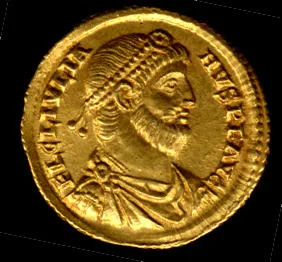
Gold Solidus of Julian (361–63)
Unknown Artist
361–363
Medium
Gold
Dimensions
Overall: 13/16 x 1/16 in. (2.1 x 0.1 cm)
Classification
Coins
Culture
Byzantine
Department
Medieval Art
Museum
Metropolitan Museum of Art, New York, NY
Credit
Gift of Darius Ogden Mills, 1904
Accession Number
04.35.21
Rights
Public Domain
Tags
Art Historical Context
This exquisite gold solidus, minted during the brief reign of Emperor Julian (–363 CE), exemplifies the pinnacle of Byzantine coinage in the late Roman Empire. Struck in pure gold—a medium prized for its durability and imperial prestige—the coin measures just 13/16 x 1/16 inches, yet carries the weight of history. Julian, often called "the Apostate" for his efforts to revive pagan classical traditions amid Christianity's rise, is depicted in a classic profile bust on the obverse, a technique rooted in Hellenistic and Roman numismatic art. The reverse likely features a standing figure, such as Victory or the emperor himself, symbolizing imperial power and divine favor. As a product of the Byzantine culture, this solidus reflects the empire's economic stability, with the solidus serving as a standard gold coin since Constantine the Great. Its fine engraving and high relief showcase masterful die-striking techniques, blending artistry with propaganda to legitimize rule across vast territories. Housed in the Metropolitan Museum of Art's Medieval Art department (gift of Darius Ogden Mills, 1904), it invites us to ponder Julian's bold but fleeting challenge to religious transformation. These tiny treasures were everyday currency yet monumental in cultural impact, circulating from Constantinople to the frontiers and preserving imperial imagery for posterity.