
Gold Tremissis of Theophilos
Unknown Artist
831–842
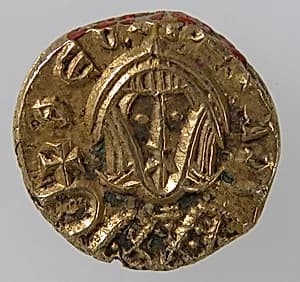
Medium
Gold
Dimensions
Overall: 7/16 x 1/16 in. (1.1 x 0.1 cm)
Classification
Coins
Culture
Byzantine
Department
Medieval Art
Museum
Metropolitan Museum of Art, New York, NY
Credit
Gift of J. Pierpont Morgan, 1917
Accession Number
17.191.122
Rights
Public Domain
Art Historical Context
Behold the *Gold Tremissis of Theophilos*, a diminutive yet dazzling artifact from the Byzantine Empire, minted between 831 and 842 during the reign of Emperor Theophilos (r. 829–842). This tiny gold coin, measuring just 7/16 x 1/16 inches (1.1 x 0.1 cm), represents the economic and imperial might of Byzantium at its medieval height. As a tremissis—a third of the standard solidus—it circulated widely, facilitating trade across the Mediterranean and symbolizing the empire's enduring wealth and stability amid political turbulence. Crafted in pure gold, the coin exemplifies Byzantine numismatic artistry, with finely struck designs likely featuring the emperor's portrait on one side and imperial symbols like a cross on the other—hallmarks of royal propaganda and Christian devotion. These miniature masterpieces required exceptional precision, blending metallurgy with engraving techniques honed over centuries, making coins both currency and portable icons of power. Now housed in the Metropolitan Museum of Art's Medieval Art Department, this treasure was a gift from J. Pierpont Morgan in 1917. It invites us to ponder the daily pulse of a vast empire, where even the smallest gold gleamed with historical gravitas.