
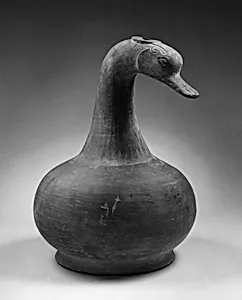
Goose-headed Vessel (Zun)
Unknown Artist
Medium
Earthenware
Dimensions
H. 13 11/16 in. (34.8 cm); Diam. 9 5/8 in. (24.4 cm)
Classification
Ceramics
Culture & Period
China · Western Han dynasty (206 B.C.– A.D. 9)
Department
Asian Art
Museum
Metropolitan Museum of Art, New York, NY
Credit
Charlotte C. and John C. Weber Collection, Gift of Charlotte C. and John C. Weber, 1994
Accession Number
1994.605.17
Rights
Public Domain
Tags
Art Historical Context
This enchanting Goose-headed Vessel, or *zun*, hails from China's Western Han dynasty (206.C.–A.D. 9), a golden age of imperial innovation and cultural flourishing under the Han emperors. Crafted in earthenware, this ritual wine vessel stands about 13 11/16 inches tall a diameter of 95/8 inches, its form cleverly shaped as a majestic goose head—a playful yet sophisticated zoomorphic design common in ancient Chinese ceramics. Zun vessels like this one were essential for ceremonial libations, often used in ancestral rites or banquets to pour and hold wine, symbolizing harmony between humans and nature. The Western Han period saw ceramics like this earthenware example mimic the prestige of bronze counterparts, showcasing advanced molding techniques that captured the goose's alert expression and graceful neck. Earthenware's accessibility made such artistry widespread, reflecting the era's blend of functionality and whimsy. Today, housed in the Metropolitan Museum of Art's Asian Art Department as part of the Charlotte C. and John C. Weber Collection, this piece offers a window into Han creativity, where everyday birds inspired elite objects. Imagine it brimming with rice wine during a moonlit feast—timeless elegance in clay!