
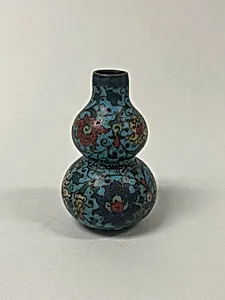
Gourd-Shaped Vase
Unknown Artist
16th century
Medium
Cloisonné enamel
Dimensions
H. 5 in. (12.7 cm)
Classification
Cloisonné
Culture & Period
China · Ming dynasty (1368–1644)
Department
Asian Art
Museum
Metropolitan Museum of Art, New York, NY
Credit
Gift of Edward G. Kennedy, 1929
Accession Number
29.110.28
Rights
Public Domain
Art Historical Context
This exquisite gourd-shaped vase, crafted in 16th-century China during the Ming dynasty, exemplifies the refined artistry of cloisonné enamel work. Standing just five inches tall, the small vessel features intricate designs of flowers and leaves rendered through the meticulous cloisonné technique. Thin metal wires were soldered onto copper body to create compartments, which were then filled with colorful enamel pastes and fired at high temperatures, resulting in a vibrant, jewel-like surface that has endured for centuries. Cloisonné enamel flourished in China under Ming patronage, blending influences from earlier Islamic and Byzantine traditions with distinctly Chinese aesthetics. Artisans of this period elevated the medium to new heights of complexity, producing objects that served both decorative and symbolic purposes in scholarly and imperial settings. The gourd form itself evokes natural abundance, while the floral motifs celebrate the beauty of the natural world, common themes in Ming decorative arts. Acquired by the Metropolitan Museum of Art as a gift in 1929, this piece offers visitors a glimpse into the sophisticated craftsmanship and cultural values of Ming China. Its compact size and delicate detailing highlight the portability and intimate appeal of such luxury items, which were often treasured in private collections.