
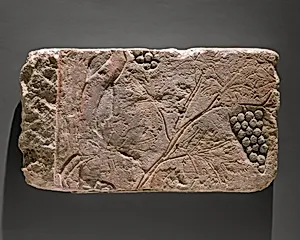
Grapevine
Unknown Artist
ca. 1353–1336 B.C.
Medium
Limestone, paint
Dimensions
H. 23 cm (9 1/16 in); w. 42 cm (16 9/16 in)
Classification
Talatat, Grapevine
Period
New Kingdom, Amarna Period
Department
Egyptian Art
Museum
Metropolitan Museum of Art, New York, NY
Credit
Gift of Norbert Schimmel, 1985
Accession Number
1985.328.23
Rights
Public Domain
Tags
Art Historical Context
Step into the sunlit world of ancient Egypt with *Grapevine*, a delicate limestone relief from the New's Amarna Period (. 1353–1336 B.C.), during Dynasty 18. This artwork, measuring 23 cm high and cm wide, captures the tendrils and clusters of grapes and vines in exquisite detail, evoking the fertile gardens that symbolized abundance and renewal along the Nile. Created by an unknown artist, it reflects the revolutionary Amarna style, which favored naturalism and elongated forms under Pharaoh Akhenaten's reign, blending realism with stylized beauty. Carved from limestone and originally adorned with vibrant paints—traces of which may still linger—the piece showcases masterful Egyptian techniques. Low-relief carving allowed for subtle shadows and depth, while pigments brought the vines to life, mimicking the play of sunlight on leaves and fruit. Such works often decorated tombs or temples, serving as eternal offerings to ensure prosperity in the afterlife. Housed in the Metropolitan Museum of Art's Egyptian Art Department (gift of Norbert Schimmel, 1985), *Grapevine* offers a glimpse into Amarna's cultural shift toward celebrating nature's bounty, possibly linked to royal estates or divine fertility. It's a timeless reminder of how ancient Egyptians wove everyday abundance into their cosmic worldview.