
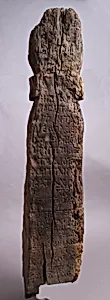
Grave Monument
Unknown Artist
10th century
Medium
Wood
Dimensions
Overall: 39 9/16 x 7 11/16 x 5 11/16 in. (100.5 x 19.5 x 14.5 cm)
Classification
Parts-Wood
Culture
Byzantine
Department
Medieval Art
Museum
Metropolitan Museum of Art, New York, NY
Credit
Rogers Fund, 1910
Accession Number
10.176.39
Rights
Public Domain
Art Historical Context
This 10th-century *Grave Monument*, crafted from wood by an unknown Byzantine artist, stands as a poignant survivor of medieval funerary art. Measuring 39 9/16 x 7 11/16 x 5 11/16 inches, modest scale suggests it served as a personal or familial grave marker, likely placed atop or near a burial site. Acquired through the Rogers Fund in 1910, it now resides in the Metropolitan Museum of Art Medieval Art department, exemplifying the enduring craftsmanship of Byzantine woodwork. In the Byzantine Empire of the 10th century golden age of Orthodox Christian culture amid military triumphs and artistic revival—such wooden monuments reflected deep spiritual beliefs in the afterlife and commemoration of the deceased. Wood was a practical yet perishable medium, often chosen for its availability and ease of carving intricate reliefs, though few examples survive due to the region's humid climate and iconoclastic history. This piece highlights the shift toward more expressive, humanistic forms in middle Byzantine art, bridging classical traditions with emerging Eastern Orthodox iconography. As a "Parts-Wood" classification indicates, it may represent a fragment or reconstructed element, underscoring the challenges of preserving organic materials. For visitors, it offers a tactile window into Byzantine daily rituals, reminding us how art intertwined with mortality in a world of emperors and monks.