
Gray Wolf
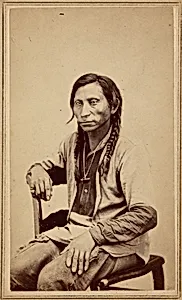
Medium
albumen print (carte-de-visite)
Dimensions
image/sheet: 9.3 × 5.4 cm (3 11/16 × 2 1/8 in.) mount: 10 × 6.2 cm (3 15/16 × 2 7/16 in.)
Classification
Photograph
Department
CPH
Museum
National Gallery of Art, Washington, D.C.
Credit
Robert B. Menschel Fund
Accession Number
2021.122.14
Rights
Public Domain
Art Historical Context
**Gray Wolf** (1860s) by William Gunnison Chamberlain captures a striking portrait in the diminutive carte-de-visite format, a hallmark of mid-19th-century photography. This albumen print, measuring just 9.3 × 5.4 cm on its sheet, exemplifies the era's innovative technique: egg whites coated on paper sensitized with silver salts produced richly toned, detailed images prized for their clarity and warmth. Carte-de-visites, like pocket-sized calling cards, exploded in popularity during the 1860s, making photography affordable and collectible for the masses—from royalty to everyday folk. Chamberlain, an American photographer active in the post-Civil War West, specialized in documenting Native American leaders and subjects amid rapid U.S. expansion. "Gray Wolf" likely portrays a dignified individual from this cultural milieu, reflecting the period's blend of ethnographic curiosity and portrait artistry. These small prints fueled a craze for celebrity and exotic imagery, traded like trading cards and pasted into albums, preserving faces and stories on the frontier. Housed in the National Gallery of Art's CPH department through the Robert B. Menschel Fund, this piece invites us to ponder photography's role in bridging worlds—artistic innovation meeting historical encounter in a format that fit right in your pocket.