
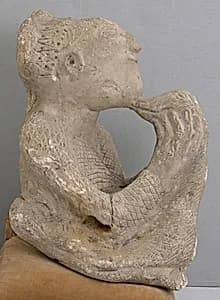
Grotesque Figure
Unknown Artist
3rd–12th century
Medium
Stone; carved
Classification
Sculpture
Department
Islamic Art
Museum
Metropolitan Museum of Art, New York, NY
Credit
Bequest of Michael Dreicer, 1921
Accession Number
22.60.5
Rights
Public Domain
Tags
Art Historical Context
Nestled in the Islamic Art collection at The Metropolitan Museum of Art, this *Grotesque Figure* is a captivating stone carving from the expansive 3rd–12th century period. Crafted by an unknown artist, the sculpture exemplifies the enduring tradition of monumental stonework in early Islamic cultures, likely originating from architectural fragments such as palace facades or funerary monuments across the vast Islamic world, from the Levant to Central Asia. Acquired through the 1921 bequest of Michael Dreicer, it invites visitors to ponder the artistry of a time when stone was meticulously chiseled to convey power and mystery. The term "grotesque" here refers not to ugliness but to fantastical, exaggerated human forms—often hybrid or distorted figures—that held cultural significance in Islamic art. These motifs, rooted in pre-Islamic traditions and adapted under Umayyad and Abbasid patronage, served apotropaic purposes, warding off evil spirits, or embellished sacred and secular spaces. The carving technique reveals masterful control of stone: deep undercutting for dramatic shadows, intricate detailing of features, and a sense of dynamic movement frozen in time, highlighting the sculptor's skill with hard materials like limestone or sandstone. This piece underscores the diversity of Islamic sculpture, often overlooked in favor of ceramics or manuscripts, yet vital to understanding how human figures were stylized to evoke awe and protection. A testament to anonymous genius, it bridges ancient and medieval worlds for modern eyes.