
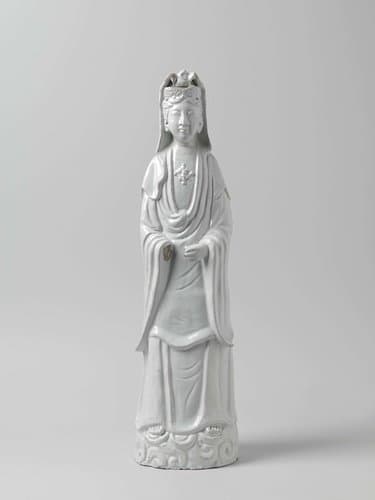
Guanyin
ca. 1720 - ca. 1750
Dimensions
18; 16.5; 65
Rights
Public Domain
About this artwork
height 65 cm x width 18 cm x depth 16.5 cm
Art Historical Context
This elegant sculpture depicts Guanyin, the bodhisattva of compassion in Chinese Buddhism, often portrayed as a serene female figure embodying mercy and protection. Created anonymously around 1720–1750 the Qing dynasty, it reflects the flourishing of Buddhist devotional art in China under the Qianlong emperor's reign, when such statues adorned temples, homes, and altars to invoke spiritual aid. Standing approximately 65 cm tall with a slender profile (18 cm wide and 16.5 cm deep), the figure suggests a graceful, elongated form typical of 18th-century Buddhist icons, designed for intimate worship or contemplation. Though the medium is unknown, its compact scale points to craftsmanship suited for personal devotion rather than grand temple display. Guanyin's enduring cultural importance lies in her role as a protector of the vulnerable—sailors, mothers, and the suffering—making this anonymous work a poignant artifact of everyday spirituality. Visitors can appreciate how such sculptures bridged elite artistry and popular faith, preserving compassion across centuries.
About the Artist
anonymous
In the vast tapestry of art history, "Anonymous" stands not as a singular individual but as a collective designation for countless unidentified creators whose works have endured across millennia. These artists, spanning prehistoric cave painters to medieval illuminators and folk craftsmen, produced the foundational layers of human visual culture. Prior to the Renaissance, when individual fame emer...