
Guardian Figure
Unknown Artist
ca. 1919–1885 B.C.
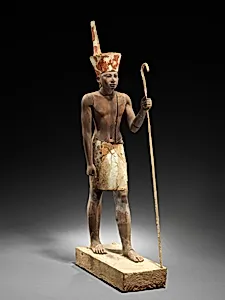
Medium
Cedar wood, plaster, paint
Dimensions
H. 57.6 cm (22 11/16 in.); W. 11 cm (4 5/16 in.); D. 26 cm (10 1/4 in.)
Classification
Statue, guardian figure
Period
Middle Kingdom
Department
Egyptian Art
Museum
Metropolitan Museum of Art, New York, NY
Credit
Rogers Fund and Edward S. Harkness Gift, 1914
Accession Number
14.3.17
Rights
Public Domain
Tags
Art Historical Context
This Guardian Figure, crafted around 1919–1885 B.C. during Egypt’s Middle Kingdom, Dynasty 12, stands as testament to the era’s renewed stability and artistic refinement. Likely created to protect a tomb or shrine, wooden sentinels embodied the ancient Egyptian belief in safeguarding the deceased in the afterlife. Its modest height of just under 23 inches suggests it may have formed part of a larger ensemble of models or served as a personal votive piece for an elite patron. The choice of cedar wood, imported from the Levant, combined with plaster paint highlights both resourcefulness and prestige. Cedar’s durability allowed for fine carving, while the applied plaster provided a smooth surface for vibrant painted details that would have brought the figure to life. This technique reflects the Middle Kingdom’s emphasis on accessible yet meaningful funerary art, moving beyond the monumental stone works of earlier periods. As a male guardian, the sculpture underscores the cultural importance of protective deities and attendants in Egyptian society. Today it offers visitors a glimpse into how everyday materials could convey profound spiritual purpose, connecting us across millennia to the hopes and artistry of ancient Egyptians.