
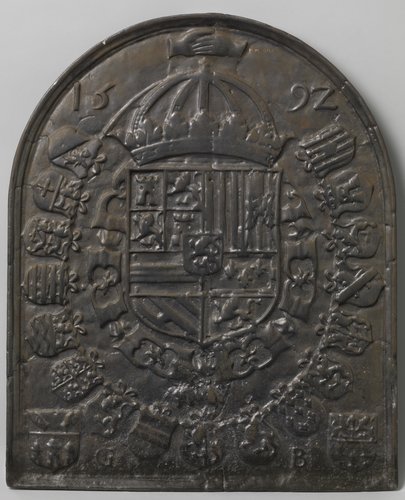
Haardplaat met het wapen van Filips II omgeven door de wapens van de Zeventien Proviniciën
in or after 1592
Medium
casting
Dimensions
28; 61; 74
Rights
Public Domain
About this artwork
inscription: ‘1592’
Art Historical Context
This striking cast-iron fireback, titled *Haardplaat met hetapen van Filips IIgeven door de wapens de Zeventien Proviciën*, dates to 1592 or and measures 74 cm high, 61 cm wide, and weighs a substantial 28 kg. Created, it served as a decorative yet functional hearth plate in Dutch fireplaces, where its robust iron construction withstood intense heat while showcasing intricate heraldry. The central coat of arms of Philip II, King of Spain and ruler of the Habsburg Netherlands, is encircled by the emblems of the Seventeen Provinces, symbolizing unity under his authority. Crafted through the lost-wax casting technique common in the Low Countries during the late Renaissance, this piece blends artistry with utility. Firebacks like this were status symbols in prosperous households, transforming everyday hearths into displays of political allegiance amid the turbulent Dutch Revolt (1568–1648). Produced around the time of escalating tensions between Spanish forces and rebellious provinces, it reflects loyalty to Philip II just before the northern provinces' formal declaration of independence in 1581—and amid ongoing strife. Today, this artifact offers a tangible glimpse into 16th-century Low Country identity, where heraldry conveyed power and regional pride. Its inscription "1592" anchors it firmly in an era of conflict and consolidation, making it a poignant relic of divided loyalties.
About the Artist
anonymous
In the vast tapestry of art history, "Anonymous" stands not as a singular individual but as a collective designation for countless unidentified creators whose works have endured across millennia. These artists, spanning prehistoric cave painters to medieval illuminators and folk craftsmen, produced the foundational layers of human visual culture. Prior to the Renaissance, when individual fame emer...