
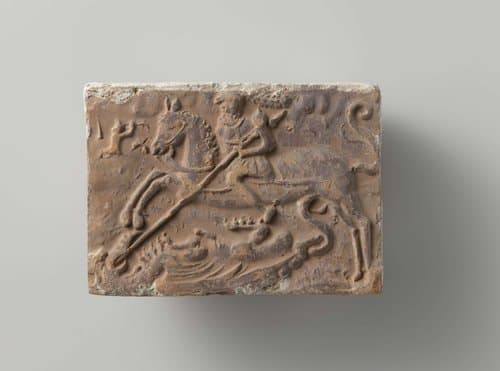
Haardsteen met voorstelling van Sint Joris te paard
c. 1575 - c. 1599
Medium
earthenware
Dimensions
5.5; 14.5; 10
Rights
Public Domain
About this artwork
hoogte 10 cm x breedte 14,5 cm x diepte 5,5 cm
Art Historical Context
Nestled in the glow of a 16th-century hearth, small earthenware tile, titled *Haardsteen met voorstelling van Joris te paard*Hearth Tile with Depiction of Saint George onback), captures a timeless tale of heroism. Crafted anonymously around 1575–1599, it measures a modest 10 cm high 14.5 cm wide and 5.5 cm deep, perfect for adorning fireplaces in Dutch or Flemish homes. The scene likely portrays the legendary Saint George, mounted and poised to slay the dragon, a motif symbolizing the triumph of good over evil. Produced during the turbulent era of the Dutch Revolt and religious upheaval, such tiles reflected enduring Catholic devotion amid Protestant Reformation pressures. Earthenware, often tin-glazed for a luminous finish, was a practical yet artistic medium in the Low Countries, where workshops churned out affordable decorative panels. These hearthstones warmed both body and spirit, turning everyday fireplaces into storytelling canvases for families. Though anonymous, the artisan's skill in compact composition highlights the era's folk art tradition—vibrant, narrative-driven, and integral to domestic life. Today, this tile offers a glimpse into Renaissance-era piety and craftsmanship, reminding us how art elevated the ordinary.