
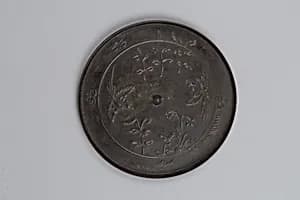
Haguro Mirror (Haguro-kyō) with Birds, Flowers, and Butterflies
Unknown Artist
12th century
Medium
Bronze
Dimensions
Diam. 4 1/4 in. (10.8 cm); D. 1/4 in. (.6 cm)
Classification
Mirrors
Culture & Period
Japan · Heian period (794–1185)
Department
Asian Art
Museum
Metropolitan Museum of Art, New York, NY
Credit
The Harry G. C. Packard Collection of Asian Art, Gift of Harry G. C. Packard, and Purchase, Fletcher, Rogers, Harris Brisbane Dick, and Louis V. Bell Funds, Joseph Pulitzer Bequest, and The Annenberg Fund Inc. Gift, 1975
Accession Number
1975.268.160
Rights
Public Domain
Tags
Art Historical Context
Step into the refined world of Heian Japan (794–1185) with the *Haguro Mirror (Haguro-kyō) with Birds, Flowers, Butterflies*, a exquisite 12th-century bronze hand mirror from the Metropolitan Museum Art's Asian Art collection. Measuring just 4¼ inches in diameter, this delicate artifact exemplifies the period's aristocratic elegance. Crafted by an unknown artist, its polished reflective surface contrasts with the intricately decorated back, featuring birds amid blooming flowers and fluttering butterflies—a celebration of nature's fleeting beauty. Bronze mirrors like this were luxury items for court ladies, essential for daily grooming and symbols of refinement in Heian culture, when poetry, aesthetics, and seasonal motifs dominated art. The *Haguro-kyō* style, named possibly for its dark patina or regional ties, showcases advanced casting techniques: designs were meticulously molded into the metal reverse, often enhanced with gilding or inlays (though this example highlights pure bronze mastery). These mirrors bridged the mundane and the poetic, evoking *mono no aware*—the pathos of impermanence. Today, this mirror from The Harry G. C. Packard Collection invites us to ponder Heian life's grace, where even a vanity tool became a canvas for harmony between humanity and the natural world. A true gem of Japanese craftsmanship!