
Halberd
Unknown Artist
ca. 1550
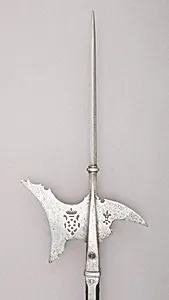
Medium
Steel, wood
Dimensions
L. 96 1/8 in. (244 cm); L. of head 21 in. (53.3 cm); W. 11 1/8 in. (28.2 cm); Wt. 5 lb. 4 oz. (2381.4 g)
Classification
Shafted Weapons
Culture
Italian
Department
Arms and Armor
Museum
Metropolitan Museum of Art, New York, NY
Credit
Gift of William H. Riggs, 1913
Accession Number
14.25.32
Rights
Public Domain
Art Historical Context
Step into the riveting world of Renaissance warfare with this imposing Italian halberd, crafted around 1550. Measuring nearly 8 feet in length and weighing over 5 pounds, this steel-headed polearm atop a wooden shaft exemplifies the pinnacle of 16th-century arms design. Its broad axe blade (21 inches long and 11 inches wide) was paired with a piercing spike and hook, making it a versatile weapon for thrusting, slashing, and dismounting armored cavalry—ideal for the infantry of Italy's fractious city-states. Halberds like this one were status symbols as much as tools of battle, wielded by professional soldiers such as Swiss pikemen or Landsknecht mercenaries who influenced Italian forces during the Italian Wars. The steel forging reflects masterful metallurgical techniques of the era, balancing durability and balance for prolonged combat. Its presence in the Metropolitan Museum of Art's Arms and Armor Department, gifted by William H. Riggs in 1913, highlights how such artifacts preserve the brutal elegance of Renaissance military culture. Imagine the clash of steel on the fields of Lombardy—this halberd brings that history vividly to life, reminding us of the ingenuity born from necessity in an age of constant conflict.