
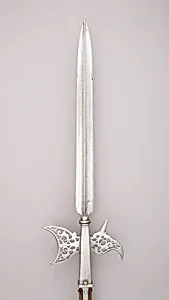
Halberd
Unknown Artist
16th century
Medium
Steel, wood
Dimensions
L. 90 in. (228.6 cm); L. of head 25 3/16 in. (64 cm); W. 7 7/8 in. (20 cm); Wt. 5 lbs. 12.1 oz. (2611 g)
Classification
Shafted Weapons
Culture
Italian
Department
Arms and Armor
Museum
Metropolitan Museum of Art, New York, NY
Credit
Gift of William H. Riggs, 1913
Accession Number
14.25.226
Rights
Public Domain
Art Historical Context
Step into the riveting world of Renaissance warfare with this striking 16th-century Italianberd, a masterpiece of functional arms and armor. Crafted from durable steel for its broad, axe-like head—measuring 25 3/16 inches long and 7 7/8 inches wide—and sturdy wooden shaft extending the total length to an imposing 90 inches, this weapon weighs in at just over 5 pounds. Its design exemplifies the ingenuity of Italian armorers, likely from renowned centers like Milan, blending thrusting spear, chopping axe, and hooked spike into one versatile polearm. Halberds like this one were essential for infantry in the turbulent battles of the Renaissance, wielded by foot soldiers to counter cavalry charges, pull knights from horseback, or breach armor. In 16th-century Italy, amid wars between city-states and invasions, such shafted weapons symbolized the shift toward disciplined pike-and-halberd formations inspired by Swiss and German mercenaries. This example's precise craftsmanship highlights the era's metallurgical prowess, where steel was forged, tempered, and balanced for both battlefield lethality and parade-ground display. Generously gifted to the Metropolitan Museum of Art by William H. Riggs in 1913, this halberd invites us to ponder the brutal elegance of history's guardians. A testament to Italy's arms-making legacy, it reminds visitors of the artistry hidden in tools of war.