
Halberd
late 17th to early 18th century
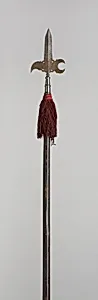
Medium
Steel, wood (ash), and brass
Dimensions
H.: 226.1 cm (89 in.); Blade with socket: H.: 28.3 cm (11 1/4 in.)
Classification
edged weapon-staff
Department
Applied Arts of Europe
Museum
Art Institute of Chicago
Accession Number
116321
Rights
Public Domain
Art Historical Context
The Halberd, dating from the late 17th to early 18th century, stands as a commanding example of European applied arts in the form of an edged staff weapon. Nearly 90 inches tall, it combines a steel blade and socket with a sturdy ash wood shaft and brass fittings, creating a versatile polearm that could chop, thrust, or hook in combat. Its unknown maker drew on established traditions of military craftsmanship, where form followed both function and the era’s growing taste for decorative detail. By this period, firearms had largely replaced such weapons on the battlefield, so the halberd often served ceremonial or guard duties, signaling rank and authority in processions or palaces. The choice of materials—strong yet flexible ash, durable steel, and ornamental brass—reflects the dual demands of practicality and display typical of European military equipment at the time. Displayed in the Art Institute of Chicago’s Applied Arts of Europe collection, this piece invites visitors to consider how everyday tools of power were elevated through skilled design, offering a tangible link to a moment when warfare, ceremony, and artistry intersected.
About the Artist
Unknown
The artist designated as "Unknown" in our virtual museum's collection exemplifies a poignant chapter in art history: creators whose identities have faded into obscurity despite the enduring power of their work. With only one known artwork attributed to them in our holdings, this figure represents countless anonymous hands that shaped visual culture across centuries. Museums worldwide, including th...