
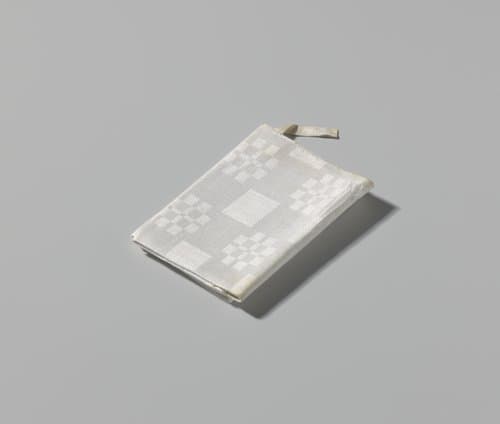
Handdoek van linnendamast met lus
Unknown Artist
1800 - 1875
Medium
linen (material)
Dimensions
79.5; 101
Rights
Public Domain
About this artwork
Schenking van de Stichting Twickel
Art Historical Context
**Handdoek van linnendamast met lus** *Unknown Artist, 1800–1875, Linen damask, 101 × 79.5 cm* This elegant linen damask hand towel, complete with a practical hanging loop, exemplifies the refined textile arts of 19th-century Europe. Measuring a generous 101 cm high by 79.5 cm wide, it was crafted during a period when households of means prized durable yet luxurious linens for daily use. The title, Dutch for "hand towel of linen damask with loop," hints at its origins in the Netherlands or nearby regions, where such items graced kitchens, bathrooms, and grand estates. Linen damask, a sophisticated weaving technique dating back centuries, creates intricate patterns through contrasting satin and plain weaves, producing reversible designs that shimmer in the light. Popular from the 17th century onward, this method reached new heights in the 1800s with industrialized looms, blending handcrafted tradition and emerging machinery. Though the artist remains unknown, the towel's survival speaks to the era's emphasis on quality household goods, often monogrammed or patterned for status. Generously donated by the Stichting Twickel—a foundation preserving the cultural heritage of the historic Twickel estate—this piece offers a tactile glimpse into domestic life. In a museum setting, it invites visitors to appreciate the artistry in everyday objects, bridging utility and beauty across two centuries.