
Hanging
Unknown Artist
late 18th–early 19th century
Medium
Silk
Dimensions
105 1/2 x 51 1/4 in. (267.97 x 130.18 cm)
Classification
Costumes-Embroidered
Culture & Period
China · Qing dynasty (1644–1911)
Department
Asian Art
Museum
Metropolitan Museum of Art, New York, NY
Credit
Gift of Mrs. Carolyn V. Bourne, 1956
Accession Number
56.178
Rights
Public Domain
Tags
Art Historical Context
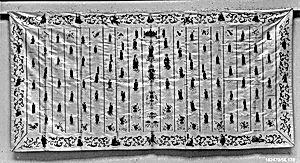
This exquisite silk hanging, created by an unknown artist during Qing dynasty (late th–early 19 century), measures an impressive 105 12 x 51 1/4 inches, it a commanding presence in any space. Classified as an embroidered textile in the Metropolitan Museum of Art's Asian collection, it likely served as a decorative wall panel or ceremonial backdrop, showcasing the era's mastery of silk weaving and intricate needlework. Qing dynasty embroideries were symbols of refinement and imperial prestige, often adorning homes of the elite or palace interiors. Silk, China's ancient "fabric of emperors," was prized for its luster and durability, allowing artisans to depict vivid human figures—tagged here as the central motif—through techniques like satin stitch and couching. These figures might evoke storytelling scenes from daily life, mythology, or courtly pursuits, reflecting Confucian ideals of harmony and virtue. A generous gift to the Met in 1956 from Mrs. Carolyn V. Bourne, this hanging preserves the technical brilliance of Qing textile arts, where every thread wove cultural narratives into tangible beauty. Visitors, imagine it swaying gently, alive with the whispers of imperial China!