
Harness Pendant
Unknown Artist
13th–early 15th century
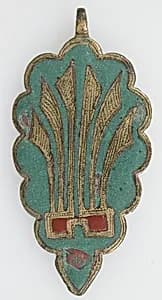
Medium
Copper, gold, enamel
Dimensions
H. 3 5/8 in. (9.2 cm); W. 1 13/16 (4.6 cm); D.1/4 in. (0.6 cm)
Classification
Miscellaneous-Badges
Culture
possibly Spanish
Department
Arms and Armor
Museum
Metropolitan Museum of Art, New York, NY
Credit
Rogers Fund, 1904
Accession Number
04.3.364
Rights
Public Domain
Art Historical Context
### Harness Pendant Step back to the medieval world of chivalry and cavalry with this exquisite *Harness Pendant*, crafted by an unknown artist between the 13th and 15th centuries. of Spanish origin, this small yet striking piece from the Metropolitan Museum of Art's Arms Armor Department was designed as a decorative badge for horse harnesses. Worn by knights or nobles during tournaments, processions, or battles, pendants adorned bridles and straps, boldly displaying status, heraldry, or devotion amid the clamor of hooves and steel. Fashioned from copper overlaid with gold and vibrant enamel, the pendant measures just 3⅝ inches high (9.2 cm), showcasing the era's mastery of *champlevé* or similar enameling techniques. Artisans fused powdered glass to the metal base in a kiln, creating durable, jewel-like colors that withstood the rigors of equestrian life. This luxurious combination of materials highlights the intersection of artistry and functionality in medieval metalwork, where even armor accessories served as canvases for opulence. Acquired through the Rogers Fund in 1904, this pendant offers a glimpse into the splendor of Hispanic craftsmanship during a time of Reconquista fervor and courtly splendor. Though its exact motifs remain a tantalizing mystery, it evokes the pageantry of medieval Spain—imagine it glinting under the sun as armored riders charged forth!