
Hatchet
Unknown Artist
Medium
Nephrite
Dimensions
H. 2 9/16 in. (6.5 cm); W. 1 1/2 in. (3.8 cm); D. 9/16 in. (1.4 cm)
Classification
Jade
Culture
Switzerland
Department
Asian Art
Museum
Metropolitan Museum of Art, New York, NY
Credit
Gift of Heber R. Bishop, 1902
Accession Number
02.18.199
Rights
Public Domain
Art Historical Context
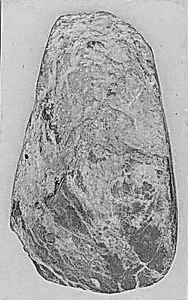
Nestled in the Metropolitan Museum of Art's Asian Art department, this petite *Hatchet* exemplifies the allure of nephrite jade, a durable and lustrous stone revered across ancient cultures. Carved by an unknown artist, the object measures just 2 9/16 inches, 1 1/2 inches wide, and9/16 inches deepsmall enough to fit comfortably in the palm, suggesting it served more as a ceremonial or symbolic item than a practical tool. Its smooth, polished surfaces highlight the artisan's mastery in shaping this tough material without metal tools. Hailing from Swiss culture, likely prehistoric Alpine communities, the hatchet reflects early European experimentation with jade. Nephrite, one of jade's two primary forms (alongside jadeite), was sourced from local deposits and prized for its resilience and ethereal green hue. These artifacts, often found in lake-dwelling sites, underscore jade's role as a status symbol in Neolithic societies, traded over long distances and evoking spiritual power. A generous gift from Heber R. Bishop in 1902, this hatchet invites us to ponder ancient craftsmanship bridging continents—its presence in Asian Art nods to jade's global legacy. Though dates remain elusive, it whispers of humanity's enduring fascination with stone that endures time itself.