
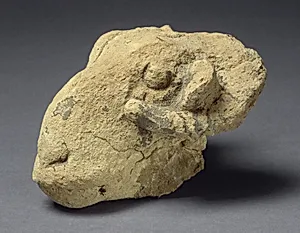
Head of a ram
Unknown Artist
ca. 3500–3100 BCE
Medium
Ceramic
Dimensions
H. 5 in. (12.7 cm)
Classification
Ceramics-Sculpture
Period
Late Uruk
Department
Ancient Near Eastern Art
Museum
Metropolitan Museum of Art, New York, NY
Credit
Purchase, James N. Spear Gift, 1981
Accession Number
1981.53
Rights
Public Domain
Tags
Art Historical Context
Nestled in the Metropolitan Museum of Art's Ancient Near Eastern Art collection, the *Head of a Ram* (ca. 3500–3100 BCE) is a striking ceramic sculpture from the Late Uruk period, one of the earliest chapters of Mesopotamian civilization. Crafted by an unknown artist, this small yet expressive piece—standing just 5 inches tall—captures the vigilant gaze and curved horns of a ram with remarkable vitality. Made from fired clay, a medium pivotal in Uruk society, it exemplifies the hand-modeled techniques of the time, where artisans shaped moist clay by pinching and smoothing before low-temperature firing. The Late Uruk period marked a transformative era in southern Mesopotamia, near modern-day Iraq, as the city of Uruk emerged as the world's first true urban center. Ceramics like this ram's head were not mere ornaments; they likely served ritual or symbolic purposes in temples or households, reflecting the society's growing complexity and reverence for animal iconography. Rams, symbols of strength, fertility, and divine power, appear frequently in early Sumerian art, hinting at their role in religious offerings or protective amulets. This intimate sculpture invites us to ponder the ingenuity of prehistoric creators, bridging the gap between utility and artistry in humanity's dawn. Acquired through the James N. Spear Gift in 1981, it remains a testament to Uruk's enduring legacy.