
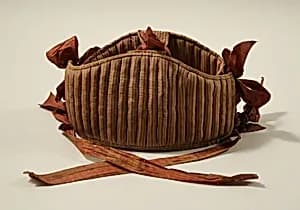
Head protector
Unknown Artist
late 18th century
Medium
silk
Classification
Head Protector
Culture
Swiss
Department
Costume Institute
Museum
Metropolitan Museum of Art, New York, NY
Credit
Gift of Mrs. DeWitt Clinton Cohen, 1939
Accession Number
C.I.39.61.7
Rights
Public Domain
Art Historical Context
This exquisite silk *Head Protector* from late 18th-century Switzerland offers a glimpse into everyday rural life and cultural traditions. Crafted by an unknown artist, this delicate piece from the Costume Institute at The Metropolitan Museum of Art was designed for practical protection—likely shielding women from sun, wind, or rain during agricultural labor—while reflecting the refined textile skills of the era. Silk, a luxurious and labor-intensive medium, was woven or manipulated to create lightweight yet durable fabric, underscoring the value placed on both functionality and elegance in Swiss peasant attire. In the late 1700s, Switzerland's mountainous regions fostered vibrant regional costumes that symbolized community identity and social status. Head protectors like this one were integral to women's ensembles, often paired with embroidered bodices and skirts in festive gatherings or daily toil. The use of silk suggests it belonged to someone of relative means, blending utility with subtle sophistication amid the Enlightenment's growing appreciation for folk arts. Generously gifted to the Met in 1939 by Mrs. DeWitt Clinton Cohen, this artifact preserves a tangible link to Switzerland's vanishing traditional dress, inviting us to appreciate how clothing wove stories of resilience and heritage. (198 words)