
Helmet finial
Unknown Artist
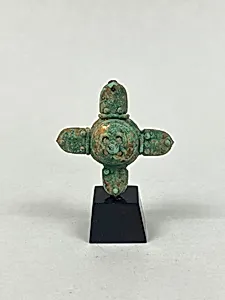
Medium
Gilt bronze
Dimensions
H. 2 5/8 in. (6.7 cm); 2 5/8 in. (6.7 cm); D. 7/8 in. (2.2 cm)
Classification
Metalwork
Culture & Period
Japan · Kofun period (ca. 300–710)
Department
Asian Art
Museum
Metropolitan Museum of Art, New York, NY
Credit
The Harry G. C. Packard Collection of Asian Art, Gift of Harry G. C. Packard, and Purchase, Fletcher, Rogers, Harris Brisbane Dick, and Louis V. Bell Funds, Joseph Pulitzer Bequest, and The Annenberg Fund Inc. Gift, 1975
Accession Number
1975.268.401
Rights
Public Domain
Art Historical Context
This exquisite gilt bronze helmet finial from Japan's Kofun period (ca. 300–710 CE) offers a glimpse into the elite warrior culture of ancient Japan. Measuring just 2⅝ inches (6.7 cm) high and deep with a ⅞-inch (2.2 cm) diameter, it was designed to crown the helmets of high-ranking individuals, likely perched atop elaborate iron or bronze helmets buried in massive keyhole-shaped tumuli tombs known as *kofun*. Theseials, often depicting mythical creatures or warriors, symbolized power, protection, and possibly shamanistic beliefs, reflecting a society transitioning from Yayoi rice-farming communities to hierarchical chiefdoms influenced by continental Asian metallurgy. Crafted in gilt bronze—a luxurious alloy of copper and tin gilded with gold through sophisticated mercury-fire techniques—the finial showcases the Kofun era's mastery of metalwork. This medium not only ensured durability but also conveyed immense prestige, as gold's luster evoked divine radiance amid the era's animistic worldview. Such ornaments were rare grave goods, underscoring social stratification and the era's technological prowess, imported via Korea and China. Today, housed in the Metropolitan Museum of Art's Asian Art Department as part of The Harry G. C. Packard Collection, this finial invites us to ponder the lives of Kofun elites—their rituals, battles, and eternal aspirations—preserved in miniature splendor.