
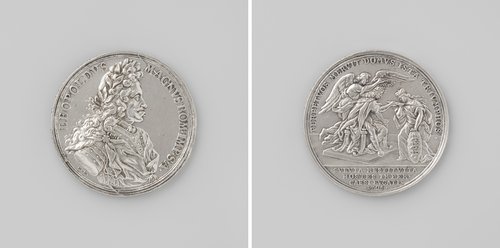
Herstel van Schwaben en aftocht van de vijandelijke troepen
1704
Medium
striking (metalworking)
Dimensions
28.72; 4.3
Rights
Public Domain
About this artwork
Gift of J.M. van Gelder-Nijhoff
Art Historical Context
### Herstel van Schwaben aftocht van de vijelijke troepen Crafted in 1704 by Georg Hautsch, a skilled German medalist from Aug, this striking medal (43 mm in diameter and weighing 28.72 grams) commemorates a pivotal moment in European military history. Hautsch, renowned for his intricate baroque-era medals, employed the striking technique—hammering a metal blank between engraved dies—to capture fine details with remarkable precision. This method allowed for mass production of high-relief designs, making medals like this one both portable art objects and powerful propaganda tools. The title, translating to "Restoration of Swabia and Retreat of the Enemy Troops," references events from the War of the Spanish Succession. In 1704, Allied forces under the Duke of Marlborough and Prince Eugene of Savoy achieved decisive victories, notably at Blenheim, forcing French and Bavarian troops to withdraw from Swabia (modern-day southwestern Germany). The medal symbolizes regional recovery and triumph, blending historical narrative with patriotic symbolism on its obverse and reverse. Generously donated by J.M. van Gelder-Nijhoff, this piece highlights the cultural role of medals as "pocket monuments," preserving fleeting victories in enduring metal. Visitors will appreciate its tactile heft and storytelling power, a testament to 18th-century artistry amid geopolitical upheaval.