
Het park van Enghien (Edingen)
1685
Medium
etching
Dimensions
285; 228
Rights
Public Domain
About this artwork
verzamelaarsmerk, verso midden onder, gestempeld: Lugt 2228a
Art Historical Context
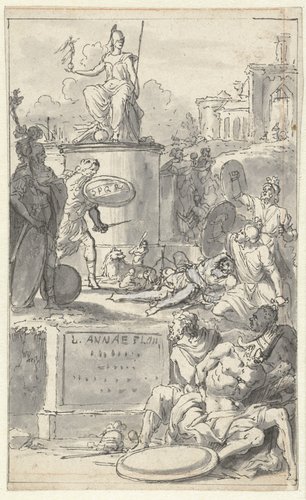
**Het park van Engh (Edingen)** Step into the lush landscapes of 17th-century Europe with Romeyn de Hooghe's etching *Het park van Engh (Edingen)*, in 1685. This delicate print (228 × 285 mm) captures the formal gardens of Enghien, a Belgian estate near Brussels, blending manicured paths, fountains, and grand architecture in a serene, topographical view. De Hooghe, a prolific Dutch artist and master printmaker, excelled at documenting notable sites, making this work a vivid snapshot of Baroque-era park design influenced by French formal gardens like those at Versailles. Etching, de Hooghe's favored medium, involved biting acid into a copper plate to create precise, fluid lines—ideal for rendering intricate foliage, water features, and distant pavilions with remarkable depth and texture. Produced during the Dutch Golden Age's waning years, such prints were affordable and widely circulated, popularizing elite landscapes among collectors and the emerging middle class. A special touch: the verso bears a stamped collector's mark (Lugt 2228a), hinting at its journey through esteemed European collections. This piece not only showcases de Hooghe's technical virtuosity but also preserves a slice of aristocratic leisure, inviting us to wander its timeless paths.
About the Artist
Romeyn de Hooghe · 1645–1708
Romeyn de Hooghe (1645-1708) was a Dutch Baroque engraver, draughtsman, and political satirist who became the most prolific and versatile graphic artist of the Dutch Republic in the late seventeenth century. Born in Amsterdam, he rose to become one of early modern Europe's most important printmakers and a pioneering master of political satire. De Hooghe's significance extends far beyond his techn...