
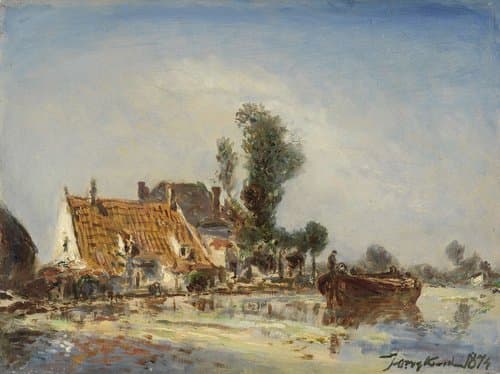
Huizen aan een vaart bij Crooswijk
Medium
oil on canvas
Dimensions
33.3; 4; 2.3; 25.1
Rights
Public Domain
About this artwork
olieverf op doek
Art Historical Context
Johan Barthold Jongkind’s “Huizen aan een vaart bij Crooswijk” captures a tranquil Dutch canal scene in 1874. Painted in oil on canvas, this modestly sized work (just 25 by 33 centimeters) reflects the artist’s lifelong fascination with the light and atmosphere of the Netherlands. Jongkind, a Dutch painter active in the mid-nineteenth century, is often regarded as a bridge between the Romantic tradition and the emerging Impressionist movement, admired by artists such as Claude Monet for his ability to suggest fleeting effects of weather and light. The choice of oil on canvas allowed Jongkind to build subtle layers of color, creating luminous skies and reflective water that bring quiet vitality to the row of modest houses along the waterway. Crooswijk, near Rotterdam, was a familiar subject for the artist, who frequently returned to such unassuming landscapes rather than grand vistas. The painting’s intimate scale invites close viewing, encouraging visitors to appreciate the gentle interplay of architecture and nature that defines much of Dutch visual culture. Today housed in the Rijksmuseum, the work offers a window into both the everyday beauty of the nineteenth-century Dutch countryside and Jongkind’s pioneering approach to outdoor painting.
About the Artist
Johan Barthold Jongkind · 1819–1891
Johan Barthold Jongkind (1819–1891) was born on June 3 in the rural village of Lattrop, in the Netherlands' Overijssel province, and emerged as a pivotal figure bridging Dutch landscape traditions with the dawn of Impressionism. He began his formal training at The Hague's art academy under the esteemed landscape painter Andreas Schelfhout, whose influence rooted Jongkind in the meticulous depictio...