
Huwelijk van prins Willem II met Maria van Engeland
Medium
striking (metalworking)
Dimensions
80.69; 6.3
Rights
Public Domain
About this artwork
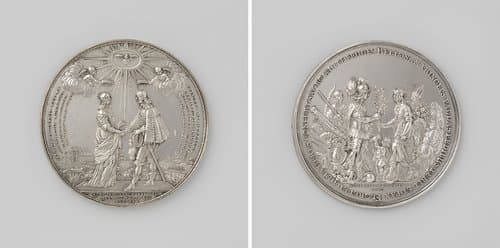
Zilveren penning. Voorzijde: prins en prinses geven elkaar hand; daarboven twee engeltjes met ieder een krans, en duif in een hemellicht; naast elk van beide personen opschrift; op achtergrond Hof van Holland. Keerzijde: prins in gedaante van Pallas, begeleid door engel ontvangt olijftak van Vrede vergezeld door Ceres en Amor; boven en onder opschrift.
Art Historical Context
### Marriage Medal of Prince William II and Mary of EnglandCrafted in 1641 by German engravers Sebastian Dadler and Johann M. Blum, this exquisite silver medal (6.3 cm in diameter, weighing 80.69 grams) celebrates the union of Willem II, Prince of Orange stadtholder of the Dutch Republic with Mary, daughter of England's King Charles I. Struck during the Dutch Golden, such medals were prized commemorative objects, blending fine metalworking with symbolic artistry to immortalize political alliances. The technique of striking—hammering a die into softened silver—allowed for intricate details, capturing Baroque-era exuberance in a portable format. The obverse depicts the princely couple clasping hands before the Hof van Holland, symbolizing their marital vow, with cherubs holding wreaths overhead and a dove in radiant heavenly light evoking divine blessing. Inscriptions flank the figures, adding a personal touch. The reverse transforms the prince into Pallas Athena, goddess of wisdom and war, as an angel guides him to receive an olive branch from Peace, flanked by Ceres (abundance) and Amor (love)—a rich allegory of harmony, prosperity, and affection amid Europe's turbulent politics. This medal underscores the strategic marriage's role in bolstering Anglo-Dutch ties post-Eighty Years' War, reflecting the era's hope for stability. As a cultural artifact, it showcases how 17th-century artists wove classical mythology into contemporary events, making grand history intimate and wearable.