
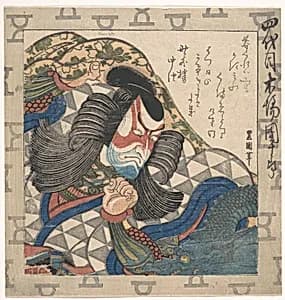
Ichikawa Danjuro IV in the Role of Kagekiyo in the Play Enlightenment from a Series of Portraits of Danjūrō
ca. 1834
Medium
Woodblock print (surimono); ink and color on paper
Dimensions
7 x 6 3/4 in. (17.8 x 17.1 cm)
Classification
Prints
Culture & Period
Japan · Edo period (1615–1868)
Department
Asian Art
Museum
Metropolitan Museum of Art, New York, NY
Credit
H. O. Havemeyer Collection, Bequest of Mrs. H. O. Havemeyer, 1929
Accession Number
JP1750
Rights
Public Domain
Tags
Art Historical Context
This exquisite woodblock print, titled *Ichikawa Danjō IV in the Role Kagekiyo in the Play Enlightenment* from a series of Danjūrō portraits, the dramatic intensity of kabuki theater during Japan's Edo period (16151868). Created around 1834 by Utagawa Toyokuni II, a of the Utagawa known for vibrant ukiyo-e prints, it depicts the renowned actor Ichikawa Danūrō IV embodying the tragic warrior Kagekiyo. Danjūrō IV, a superstar of the kabuki stage, was celebrated for his powerful onnagata (female role) performances and aragoto (rough, exaggerated male) styles, making this portrait a vivid snapshot of Edo-era popular culture. As a surimono—a deluxe, privately commissioned woodblock print—the artwork stands out for its refined techniques. Printed with ink and color on paper in a compact 7 x 6 3/4 inches, surimono often featured embossing, metallic pigments, and poetic inscriptions for elite patrons, elevating them beyond mass-produced ukiyo-e. Toyokuni II's bold lines, dynamic poses, and rich coloration highlight the actor's fierce expression and flowing robes, immersing viewers in the theatrical world where stars like Danjūrō blurred the lines between art and performance. Housed in the Metropolitan Museum of Art's Asian Art Department from the H. O. Havemeyer Collection, this print exemplifies how ukiyo-e immortalized kabuki's cultural dominance, offering modern visitors a window into 19th-century Japan's love for spectacle and storytelling.