
Ideal Head of French Republic
19th century
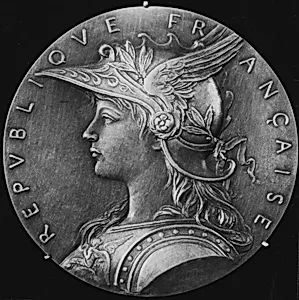
Medium
Bronze, cast
Dimensions
Diameter: 5 in. (127 mm)
Classification
Medals and Plaquettes
Culture
French
Department
European Sculpture and Decorative Arts
Museum
Metropolitan Museum of Art, New York, NY
Credit
Gift of Samuel P. Avery, 1893
Accession Number
93.10.23
Rights
Public Domain
Tags
Art Historical Context
Behold the *Ideal Head of the French Republic*, a exquisite bronze medal crafted by Louis-Oscar Roty in the 19th century. Measuring just 5 inches in diameter, this intimate cast piece captures a poised female profile, evoking the allegorical figure of Marianne—the enduring symbol of liberty, reason, and the French Republic. Roty, a master engraver and leading figure in France's medal renaissance, infused his work with classical elegance, drawing on Renaissance traditions while embracing the era's refined naturalism. Created during the Third Republic (1870–1940), this plaquette reflects France's post-Revolutionary pride and republican ideals, where such medals served as portable emblems of national identity, often exchanged as gifts or worn as jewelry. The bronze medium, with its warm patina and precise casting, highlights Roty's virtuosity in low-relief sculpture, blending sculptural depth with the intimacy of engraving. Donated to the Metropolitan Museum of Art in 1893 by collector Samuel P. Avery, it exemplifies the department's treasures in European Sculpture and Decorative Arts. This small yet powerful artwork invites visitors to ponder the artistry behind symbols of statehood, reminding us how 19th-century medallists like Roty elevated everyday objects into profound cultural statements.
About the Artist
Louis-Oscar Roty · 1846–1911
Louis-Oscar Roty, commonly known as Oscar Roty (1846–1911), was born on June 11 in Paris's Belleville neighborhood, the son of a modest schoolmaster. He began his artistic training under Horace Lecoq de Boisbaudran at the Petite École (later the École des Arts Décoratifs), honing his drawing skills, before entering the École des Beaux-Arts in 1864. There, he studied sculpture and medal engraving u...