
Ikuyo no mutsugoto (Nocturnal pillow talk)
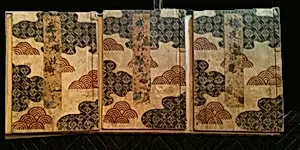
Medium
Three color woodblock printed volumes
Dimensions
24 × 28 cm (9 1/2 × 11 in.)
Classification
book
Department
Arts of Asia
Museum
Art Institute of Chicago
Accession Number
204073
Rights
Public Domain
Art Historical Context
**Ikuyo no Mutsugoto (Nocturnal Pillow Talk)** Utagawa Kunisada I (Toyokuni III), c. 1831* *Three color woodblock printed volumes,24 × 28 cm (9 ½ × 11 in.)* *Arts of Asia, Art Institute Chicago* Step into the vibrant world of-period Japan with Utagawa Kunada I's *Ikuyo no Mutsugoto*, a captivating set of three color woodblock printed volumes from 1831. Kunisada, a master of the Utagawa school and later known as Toyokuni III, was one of the most prolific ukiyo-e artists, renowned for his lively depictions of beauties, actors, and scenes from the "floating world" of pleasure and entertainment. This intimate book, evoking whispered conversations in the night, exemplifies the playful yet sophisticated ehon (picture-book) tradition, where text and image intertwined to delight private audiences. The medium shines through Kunisada's mastery of nishiki-e, or "brocade prints," achieved via intricate woodblock carving and layering of vibrant colors from multiple blocks. Produced during Japan's Tokugawa era, when strict censorship limited overt eroticism, such volumes often veiled sensual themes in poetic titles like "Nocturnal Pillow Talk," nodding to the classical *Pillow Book* by Sei Shōnagon. These affordable yet luxurious books democratized art, circulating among the merchant class and offering a glimpse into urban fantasies. Kunisada's expressive figures and dynamic compositions capture the era's cultural pulse, blending humor, sensuality, and technical brilliance. A treasure in the Art Institute of Chicago's collection, it invites visitors to ponder the artistry behind Japan's enduring woodblock legacy.
About the Artist
Utagawa Kunisada I (Toyokuni III) · 1786–1864
Utagawa Kunisada I, also known as Toyokuni III (1786–1865), was born Sumida Shōgorō in the Honjo district of Edo (modern Tokyo) into a family that operated a hereditary ferry-boat service, providing stability after his father's early death. Displaying prodigious talent in drawing from childhood, he became an apprentice to the master Utagawa Toyokuni I around 1801 at age fifteen, entering the prest...