
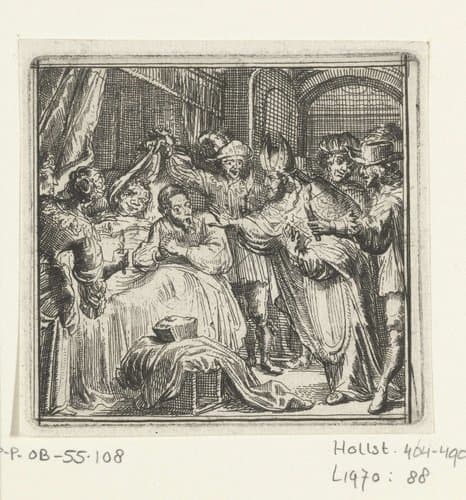
Illustratie voor de Decamerone van Boccaccio
1697
Medium
etching
Dimensions
79; 75
Rights
Public Domain
About this artwork
height 75 mm x width 79 mm
Art Historical Context
**Illustratie voor de Decone van Boccaccio *Romeyn de Hooghe 1697, etching, 75 × 79 mm This etching by Dutch Baroque artist Romeyn de Hooghe (1645–1708) captures the spirit of Giovanni Boccaccio's *amerone*, the 14th-century Italian masterpiece of 100 witty tales told by ten young Florentines fleeing the Black Death. Created in 1697 for a Dutch edition, de Hooghe's illustration reflects the era's fascination with classical literature, blending Renaissance storytelling with 17th-century Northern European flair. De Hooghe, a prolific illustrator known for his dynamic book engravings, satirical prints, and vivid scenes of daily life, brought Boccaccio's earthy humor and human drama to life in compact, intricate compositions perfect for printed pages. Etching allowed de Hooghe to achieve fine lines and rich tonal contrasts on this petite scale—ideal for intimate book integration. His Baroque style shines through in expressive figures and bustling narratives, emphasizing themes of love, folly, and resilience that resonated across centuries. This work exemplifies how 17th-century Dutch artists revitalized medieval texts, making them accessible and visually thrilling for a growing literate public amid the Dutch Golden Age's cultural boom. (178 words)
About the Artist
Romeyn de Hooghe · 1645–1708
Romeyn de Hooghe (1645-1708) was a Dutch Baroque engraver, draughtsman, and political satirist who became the most prolific and versatile graphic artist of the Dutch Republic in the late seventeenth century. Born in Amsterdam, he rose to become one of early modern Europe's most important printmakers and a pioneering master of political satire. De Hooghe's significance extends far beyond his techn...