
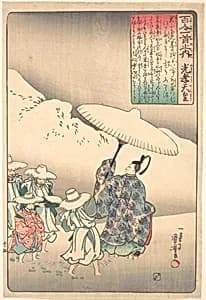
Illustration of Poem by the Emperor Kwoko
1797–1861
Medium
Woodblock print; ink and color on paper
Dimensions
14 3/4 x 10 in. (37.5 x 25.4 cm)
Classification
Prints
Culture & Period
Japan · Edo period (1615–1868)
Department
Asian Art
Museum
Metropolitan Museum of Art, New York, NY
Credit
Henry L. Phillips Collection, Bequest of Henry L. Phillips, 1939
Accession Number
JP2862
Rights
Public Domain
Tags
Art Historical Context
This exquisite woodblock print, *Illustration of Poem by the Kwoko*, is a work by Utagawaiyoshi (1797–1861), one of the most imaginative masters of Japan's ukiyo-e tradition during the Edo period (1615–1868). Created using ink and color on paper, measuring 14 3/4 x 10 inches, it exemplifies the vibrant, accessible art form that brought beauty to everyday life through mass-produced prints. Kuniyoshi, renowned for his dynamic warrior scenes and whimsical imagery, here channels poetic elegance, blending literary reverence with visual storytelling. The print illustrates a poem attributed to Emperor Kwoko, highlighting the deep cultural interplay between imperial poetry and visual arts in Japan. During the Edo era, woodblock printing techniques— involving carved wooden blocks inked and pressed onto paper—allowed for bold colors and intricate details, making high art available to merchants and commoners alike. This piece, tagged with themes of poetry and men, likely depicts scholarly or courtly figures, evoking the refined waka tradition that influenced generations of artists. Housed in the Metropolitan Museum of Art's Asian Art Department as part of the Henry L. Phillips Collection (1939), it offers a window into Japan's golden age of printmaking, where poetry and imagery intertwined to celebrate human emotion and nature's harmony. A true gem for visitors seeking the poetic soul of Edo Japan!
About the Artist
Utagawa Kuniyoshi · 1797–1861
Utagawa Kuniyoshi (1797–1861) was born in Edo to the silk-dyer Yanagiya Kichiyemon, originally bearing the childhood name Yoshisaburō. From a young age, he assisted in his family's pattern design work, which sharpened his innate mastery of color and textile motifs that would permeate his later prints. At around twelve years old, his prodigious drawing skills drew the attention of the renowned Utag...