
Illustrations of imitation of Eclogue I
1820 - 1821
Medium
wood engraving
Dimensions
77; 35
Rights
Public Domain
About this artwork
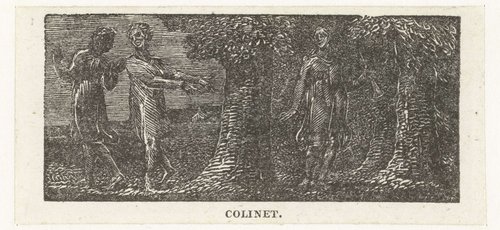
inscription: ‘Colinet’
Art Historical Context
William Blake's *Illustrations of imitation ofclogue I* (1820–1821) is a delicate wood engraving, measuring just 35 × 77 mm, capturing the essence of pastoral poetry in miniature form. Created late in the visionary artist's life, it illustrates an imitation of Virgil's *Eclogue I*, the ancient Roman poet's idyllic dialogue between shepherds Tityrus and Meliboeus. The inscription "Colinet"—a nod to the shepherd-poet figure from Renaissance pastoral traditions, like Edmund Spenser's *The Shepheardes Calender*—evokes themes of rustic harmony, exile, and poetic longing that resonated through centuries of English literature. As a wood engraving, this work showcases Blake's innovative adaptation of relief printing techniques, influenced by contemporaries like Thomas Bewick. Unlike his earlier intaglio etchings with mystical visions, these tiny vignettes demonstrate his precision in linear design, where intricate details emerge from end-grain wood blocks for sharp, reproducible images. Produced for Robert John Thornton's ambitious *Pastorals of Virgil* project, it blended classical antiquity with Romantic sensibility, making elite literature accessible via affordable books. This piece highlights Blake's versatility, bridging his prophetic imagination with commercial engraving. Its small scale invites close contemplation, reminding visitors of how 19th-century artists revived pastoral idylls amid industrialization, preserving a timeless dialogue between nature, art, and the human spirit.
About the Artist
William Blake · 1757–1827
William Blake (1757–1827) stands as one of the most visionary and unconventional artists in British history, a poet-painter-printmaker whose mystical imagination and radical vision profoundly shaped the Romantic movement. Born in London's Soho district, Blake experienced visions from childhood—claiming to see angels in trees at age eight—and these spiritual encounters would guide his art throughou...