
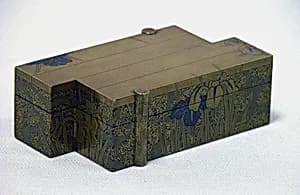
Incense Box (Kogo) with Design of Iris and Bridge (Yatsuhashi)
19th century
Medium
Gold-speckled aventurine (nashiji) lacquer with sprinkled and polished design (hiramakie)
Dimensions
H. 1 1/16 in. (2.7 cm); W. 1 1/8 in. (2.9 cm); L. 3 5/8 in. (9.2 cm)
Classification
Lacquer
Culture & Period
Japan · Edo period (1615–1868)
Department
Asian Art
Museum
Metropolitan Museum of Art, New York, NY
Credit
The Howard Mansfield Collection, Purchase, Rogers Fund, 1936
Accession Number
36.100.157a, b
Rights
Public Domain
Art Historical Context
This exquisite Incense Box (K) with Design of Iris Bridge (Yatsuhashi) exemplifies the refined artistry of Japanese lacquerware during the Edo period. Created by Yamada Jōkasai, a master lacquer artist active in the late 17th and early 18th centuries, the small container was likely used in the elegant practice of incense appreciation. Its compact form, measuring just over three and a half inches long, highlights the intimate scale of such objects, designed for personal or ceremonial use in refined domestic settings. The box features a celebrated motif drawn from classical Japanese literature, specifically the Yatsuhashi episode in The Tales of Ise, where a zigzag bridge crosses a marsh of blooming irises. This poetic scene, rendered in gold-speckled aventurine lacquer known as nashiji, evokes themes of travel, nature, and fleeting beauty central to Japanese aesthetics. The design employs hiramakie, a meticulous technique in which gold or silver powder is sprinkled onto wet lacquer and then polished to create a smooth, luminous surface that catches the light subtly. Such works reflect the high status of lacquer as an art form in Edo-period Japan, where skilled artisans combined technical precision with literary references to create objects of both utility and contemplation. This piece, part of the Metropolitan Museum’s Howard Mansfield Collection, invites viewers to appreciate the quiet luxury and cultural depth embedded in even the smallest everyday treasures.